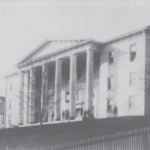
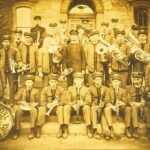
The Bellefonte Academy was a popular private school that educated students from Centre County and across Pennsylvania for more than 125 years. The “School in the Mountains,” as it was known, operated from 1805-1934, except during the War of 1812 and Civil War.
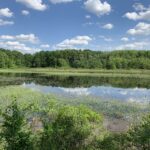
The Scotia Barrens is a distinct ecozone of about 6,200 acres west of State College protected within State Game Lands #176. The area is a microclimate zone, with temperatures noticeably lower than the adjoining areas, that features plentiful plant and animal life.
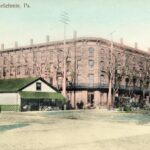
The Bush House was a four-story hotel situated along Spring Creek in downtown Bellefonte built by Daniel G. Bush. Before it was destroyed by fire in 2006, it was a contributing property in the Bellefonte National Historic District.
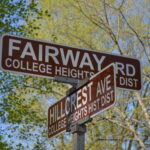
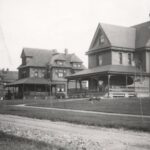
College Heights is a residential neighborhood in State College that was originally developed to provide housing for Penn State faculty, staff, and students. Much of the neighborhood is included in a National Register Historic District.
Shortly before the dawn of the automobile age, two Centre County railroads established summer recreational parks that attracted thousands of visitors annually. Hecla Park and Hunters Park were built to create modest but dependable sources of income that helped railroads weather the ups and downs of the freight business.
In the late 19th and early 20th centuries, Penn State built on-campus cottages to house faculty members. In the years since, the cottages have served many purposes and three still fulfill important roles on the campus.
The Alpha Fire Company is the volunteer company that serves State College, Penn State, and the surrounding townships. The company was founded in 1899 as the Union Fire Company. A year later, the name was changed to Alpha Fire Company.
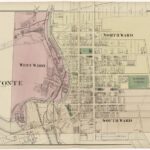
Centre County is comprised of twenty-five townships and ten boroughs that provide local government for residents. The number of boroughs and townships has grown and changed since the county’s founding in 1801.
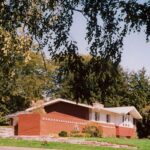
Philip Fischler Hallock was a professor at Penn State whose design of residential and commercial projects contributed to the growth of modern architecture in Centre County in the middle of the twentieth century.
Boalsburg, originally known as Springfield, is a historic village in Harris Township, near the base of Tussey Mountain. After the Revolutionary War, settlers moved to the valley and among them was David Boal, who built a stone cabin in 1803, which still stands as part today’s Boal Mansion.