Julia Brill
Julia Gregg Brill was the first female professor in Penn State’s English Department where she taught composition from 1924 to 1954. She was a tireless advocate for women and recognized by the university for her work.

Julia Gregg Brill was the first female professor in Penn State’s English Department where she taught composition from 1924 to 1954. She was a tireless advocate for women and recognized by the university for her work.
In the late 19th and early 20th centuries, Penn State built on-campus cottages to house faculty members. In the years since, the cottages have served many purposes and three still fulfill important roles on the campus.
The Alpha Fire Company is the volunteer company that serves State College, Penn State, and the surrounding townships. The company was founded in 1899 as the Union Fire Company. A year later, the name was changed to Alpha Fire Company.

Philip Fischler Hallock was a professor at Penn State whose design of residential and commercial projects contributed to the growth of modern architecture in Centre County in the middle of the twentieth century.

Franco Harris was a popular Penn State graduate who went on to a Hall of Fame career as a running back for the Pittsburgh Steelers in the National Football League.

The University Club, often known simply as the UClub, is a social organization founded in 1908. Until it was demolished in 2022, the club’s three-story building was a landmark in State College.
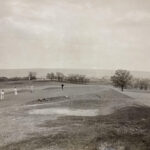
Penn State’s golf courses have evolved from a rudimentary course of four or five holes in the late 1800s to the 18-hole Blue and White courses that the university operates today.
Wallace “Wally” Triplett was a trailblazing Penn State athlete who was the first Black student to earn a varsity letter on the football team and the first drafted by a National Football League team.
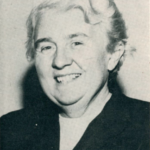
Mary Louisa Willard was a long-time chemistry professor at Penn State and an expert in chemical microscopy who became internationally known for her scientific work helping to solve crimes. Willard was born on Mary 19, 1898, in Moffatt Cottage on the Penn State campus.
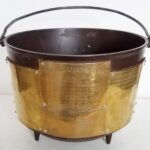
The “Old Iron Kettle” is the coveted trophy that from 1941 to 1972 was awarded to the winner of the Bellefonte-State College football game. As the two largest high schools in Centre County, Bellefonte and State College had a passionate rivalry for decades. The winner of the game proudly got to keep and display the kettle.